EIRT, an intelligent robot for e-waste
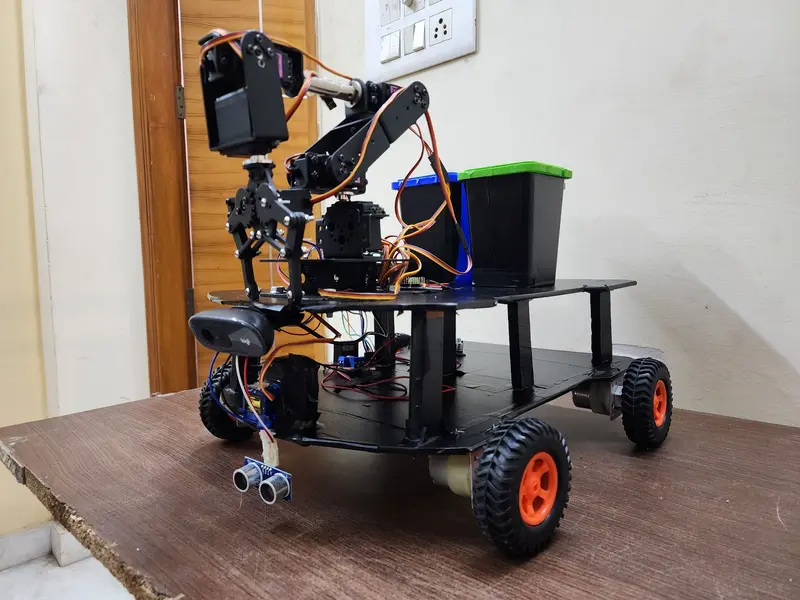
It finds electronic waste, picks it up, decides what it is and puts it in the right bin.
The problem
The world threw away about 50 million tonnes of electronic waste in 2021, and only about a fifth of it was recycled properly. Sorting it by hand is slow and exposes people to the toxic metals inside. EIRT asks a simple question: can a small robot find e-waste, recognise what it is and sort it, without anyone handling it?
How it works
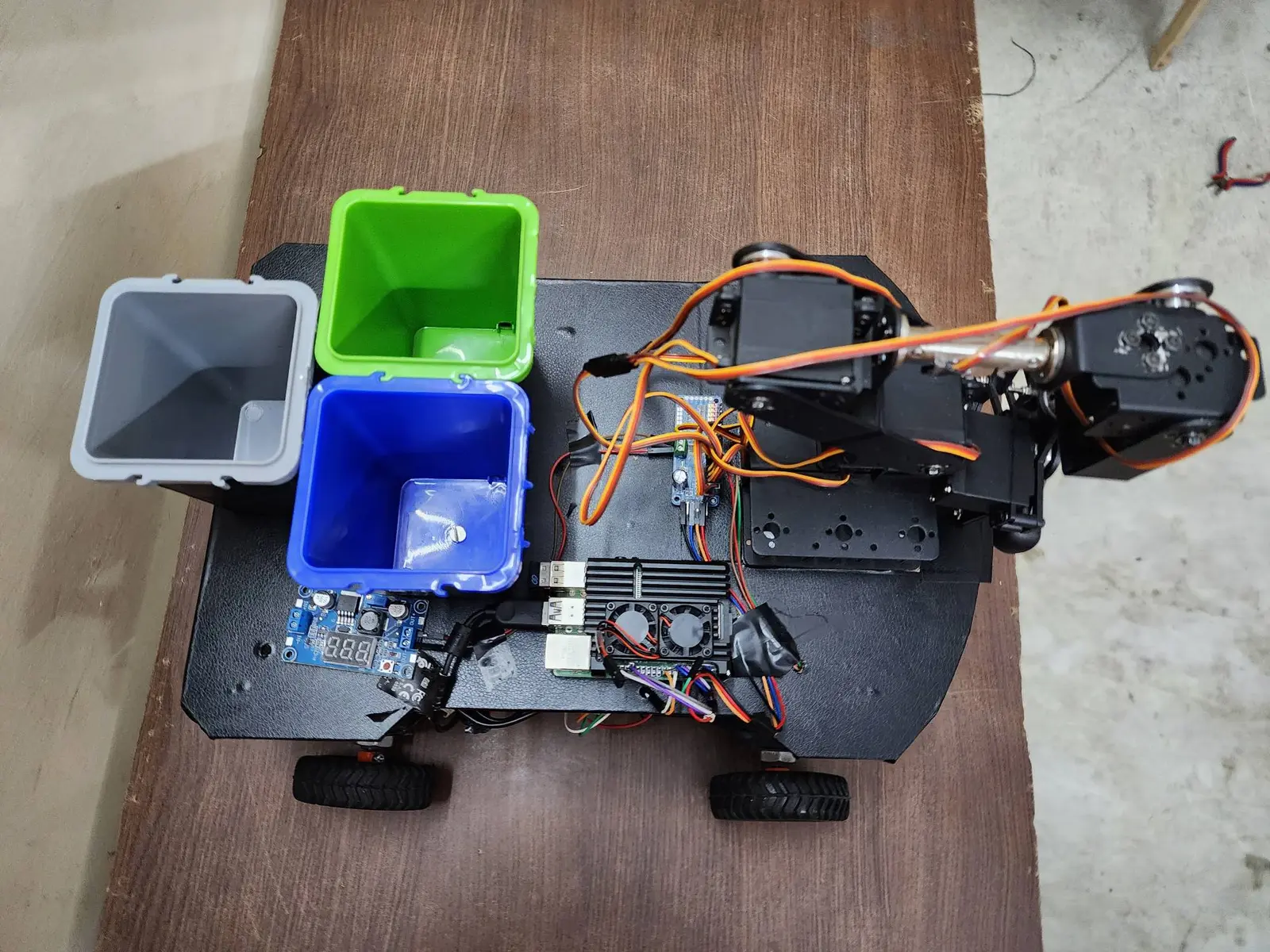
Everything runs on one Raspberry Pi on the robot: the model, the arm and the motors. No laptop; a monitor was only plugged in over HDMI to watch the output. Tap a part.
What I built
The entire hardware, all of its logic and the definitions behind it, and the code for every module, written in an object oriented style. The one exception is a single sensor module, which Tursélio Mahoque built.
- The robot itself: the four wheel car, the robotic arm, the sorting bins and the power supply, all wired to one Raspberry Pi.
- Search and movement: the ultrasonic search that finds an item and the drive code that takes the robot to it.
- Pick and sort: the arm control that picks the item up and drops it in the right bin.
- Classification on the robot: running the EfficientNet model on the Pi, so the whole loop works on board with no laptop.
Result
The EfficientNet-D2 model classified e-waste at 82.3% accuracy. The work was published at IEEE ICCCNT 2023.
EIRT version 2, on ROS
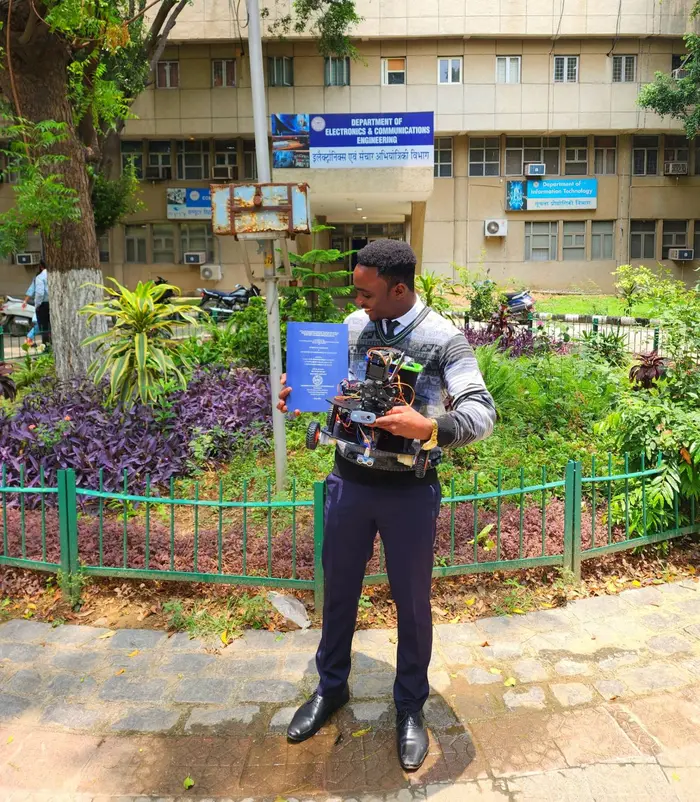
I am rebuilding EIRT on the Robot Operating System (ROS), taking the same robot from a single program to a modular robotics stack.
Hiring for embedded or software?
Pick the CV that fits the role, or just email me. I reply within a day.